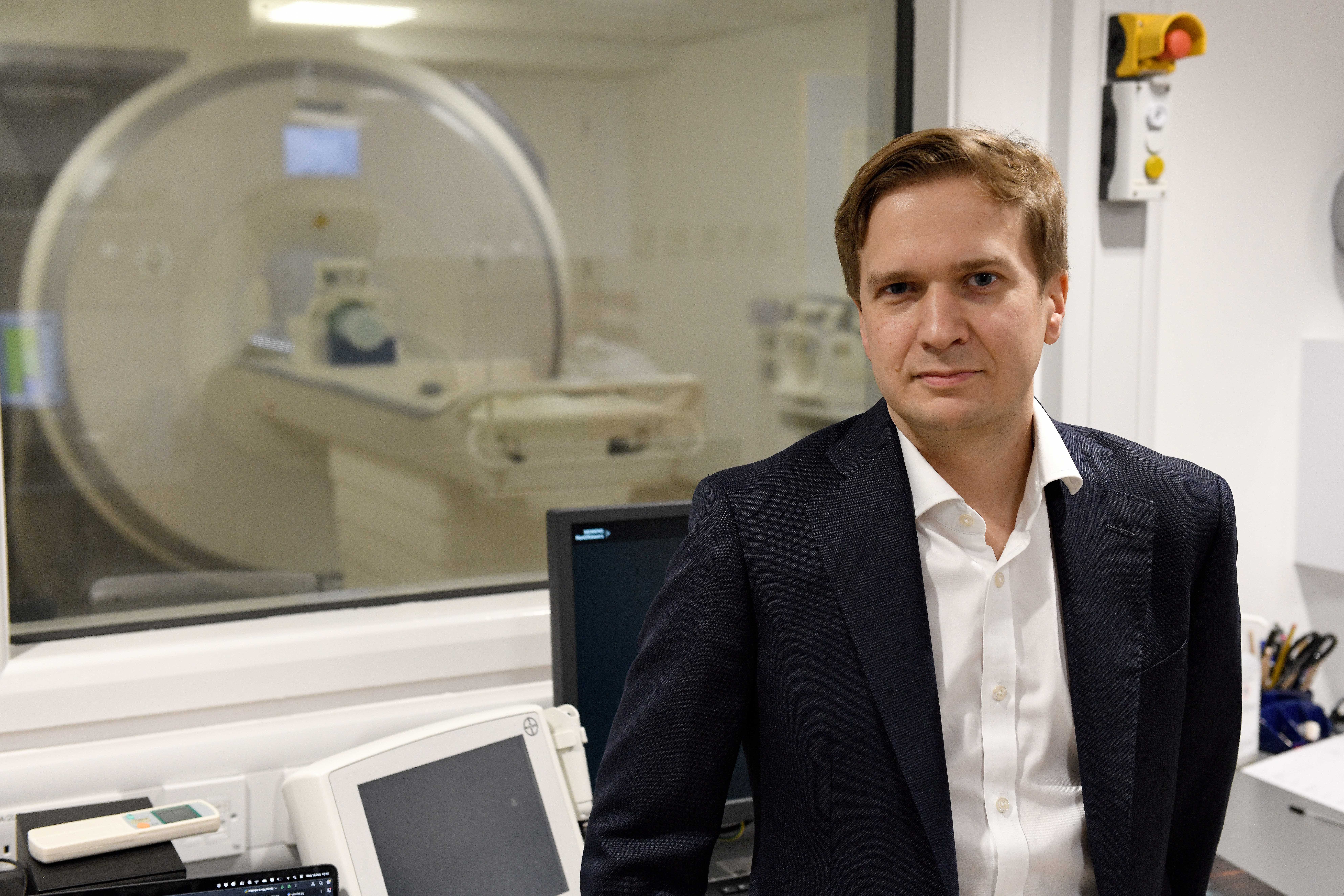
Automated cardiac MRI planning and quality control from BHF-funded research at Imperial College London.
Now entering randomised clinical trials
See how it works ↓
Now entering randomised clinical trials
See how it works ↓AID-MR is a fully automated system for planning and optimizing cardiac MRI scans.
AID-MR allows scans to be performed:
Under the hood, AID-MR uses a powerful 3D convolutional neural network – a type of artificial intelligence trained to understand cardiac anatomy in 3D – to determine how best to scan the heart.
It runs directly on Siemens MRI scanners and requires no additional staff training or user interface.
The system can operate headlessly, or with an optional dashboard for extra quality control insights.
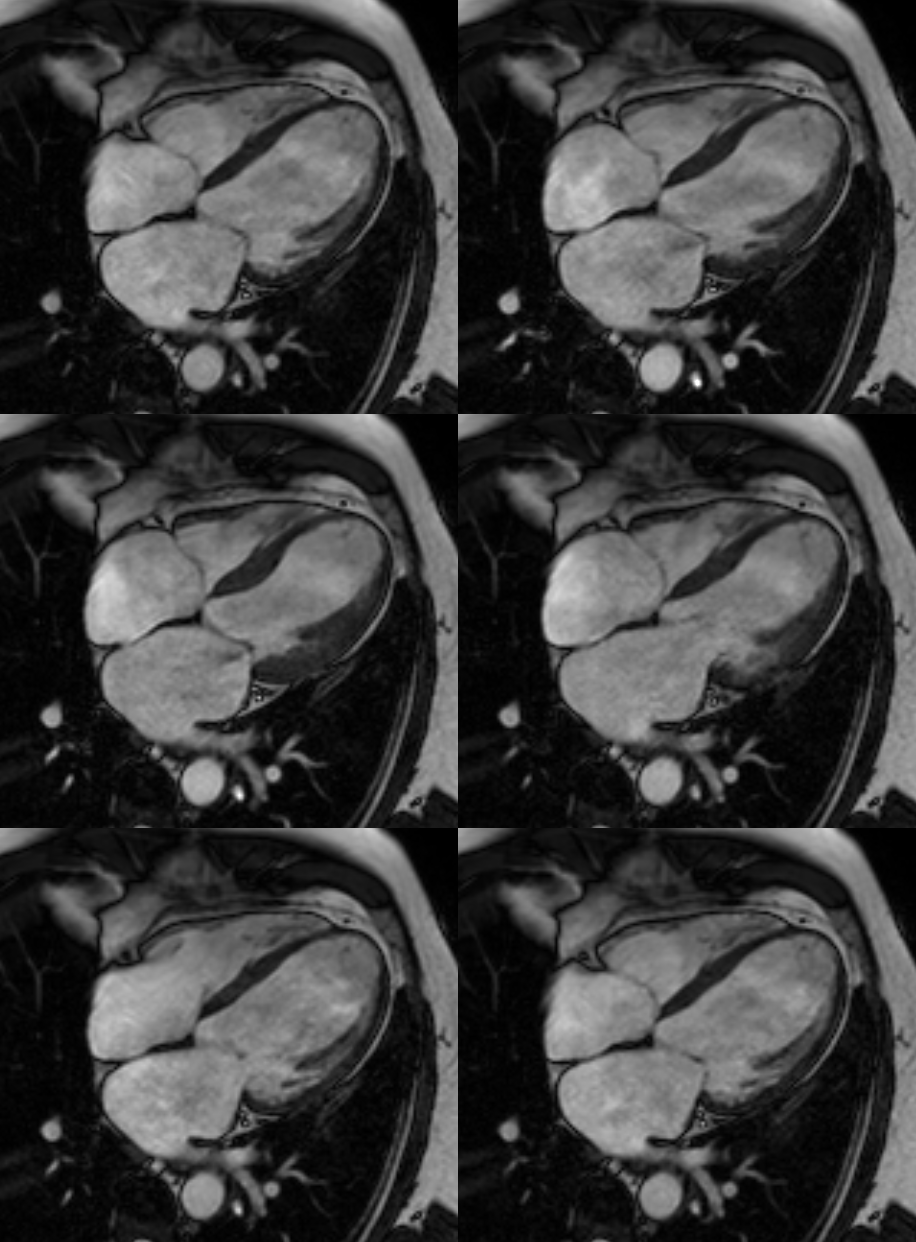
2 Chamber
3 Chamber
4 Chamber
Short axis stack
Aortic valve
Aortic flow
RV stack
RV 2 chamber
AID-MR plans 11 cardiac views — including valve stacks and RV views — in one shot
AID-MR uses sequences that are already acquired in routine practice, whilst eliminating the need for localizers
AID-MR assessment cines for planning accuracy and artefacts
Feedback is tailored to the patient
AID-MR can identify when replanning is necessary or a change in protocol is required
AID-MR selects the smallest field of view needed to cover the heart — improving resolution and reducing scan time
AID-MR selects the best phase encoding direction to eliminate wrap artefact and phase steps
AID-MR ensuresoptimal magnetic field homogeneity (shimming) over the cardiac volume from scan start
This improves image quality from the outset
AID-MR receives routine images already acquired at the start of a cardiac MRI scan - no extra sequences are needed
AID-MR uses a type of AI called a 3D convolutional neural network to locate key anatomical landmarks
All required scan planes and optimal imaging parameters are determined in a single step - images can be acquired in any order
After each image is acquired, AID-MR provides continuous quality scores and feedback, allowing the system to adapt or recommend changes if needed
The system integrates seamlessly with Siemens MRI scanners using the FIRE API. There are no extra hardware requirements
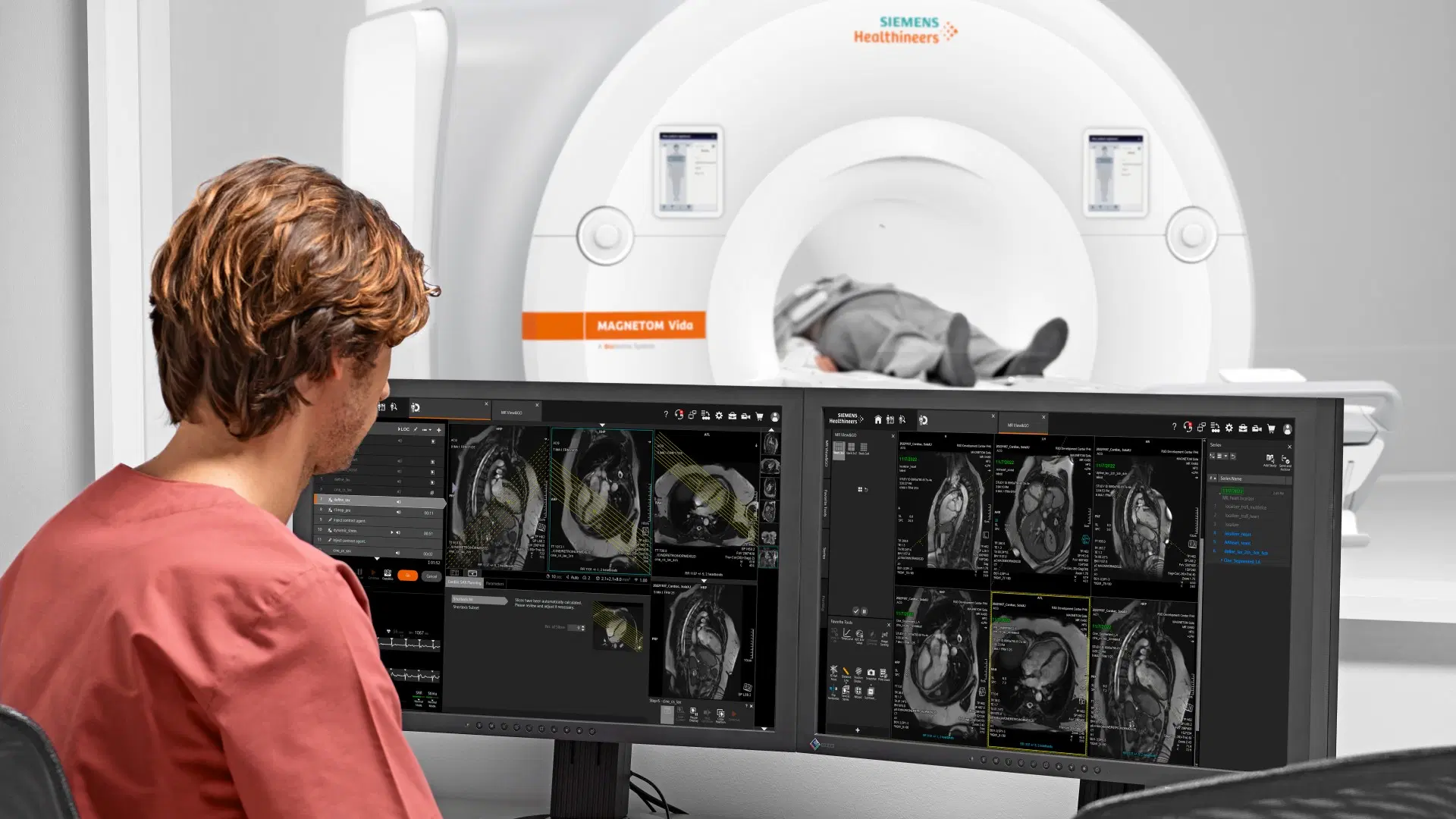
Preview image of the scanner interface with AI-planned scan instructions
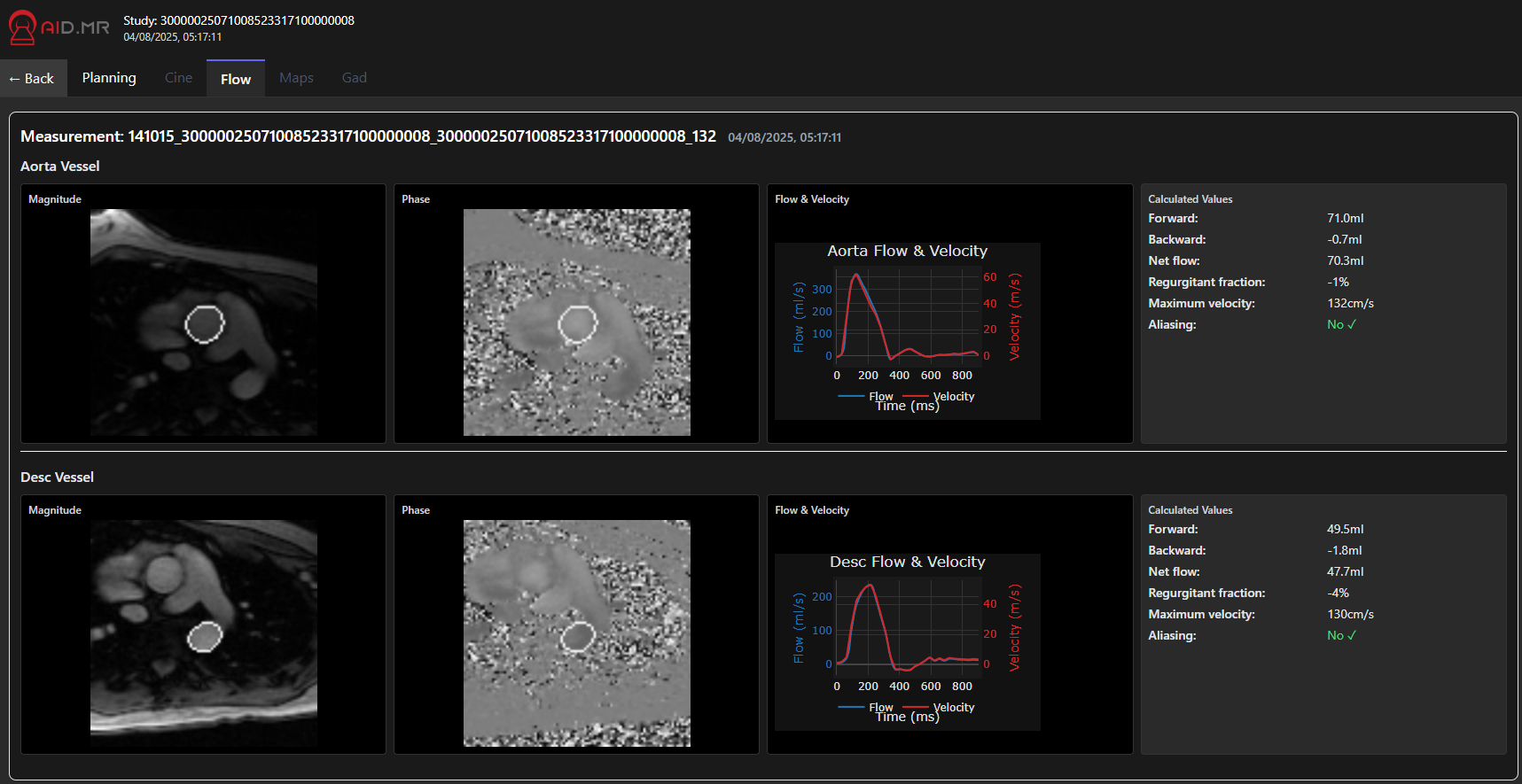
Optional dashboard showing quality control output
Journal: Journal of Cardiovascular Magnetic Resonance
View Article
Associate Professor, Consultant Cardiologist and Computer Scientist
AID-MR was developed from BHF-funded research at Imperial College London.
James leads the upcoming randomised clinical trial of AID-MR and is the sole inventor of the technology.